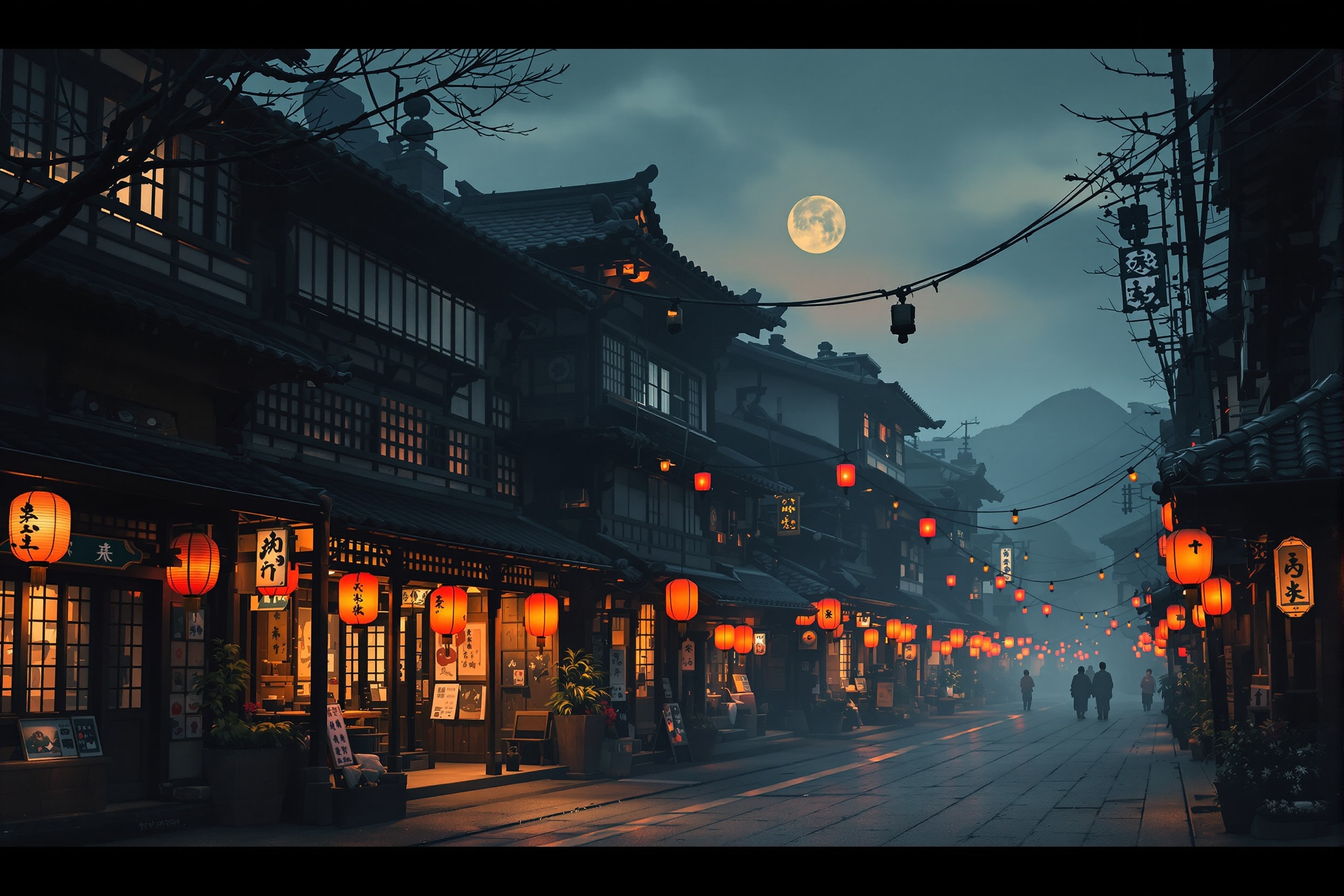
Rakugo is often described as a 400-year-old art, and its lineage really does stretch back to the early Edo period. But the form we recognise today — comic tales performed for a paying urban audience — took shape gradually, out of sermons, salons and the booming entertainment districts of Japan's great cities.
Sermons and salons
Many historians trace rakugo's distant origins to otogishū, professional storytellers who entertained feudal lords, and to the comic anecdotes that Buddhist priests wove into their preaching to keep congregations awake. A monk named Anrakuan Sakuden compiled a famous collection of funny stories, the Seisuishō, in the early seventeenth century, and such anthologies gave later performers a shared repertoire of punchlines to draw on.
By the late 1600s, individual entertainers in Kyoto, Osaka and Edo were performing comic stories for tips in the open air and in teahouses. These street-corner talkers were the true ancestors of the professional rakugoka.
The rise of the yose
The eighteenth and nineteenth centuries saw comic storytelling move indoors into dedicated variety halls called yose. At their peak, Edo (modern Tokyo) supported hundreds of these small theatres, where audiences of townsfolk could drop in for an afternoon or evening of rotating performers. The yose gave rakugo a stable home, a professional structure and a ladder of ranks for performers to climb.
Two regional styles matured in parallel. Edo rakugo, centred on Tokyo, grew crisp and understated. Kamigata rakugo, centred on Osaka and Kyoto, kept a livelier, more musical street-performance energy, sometimes using a small table (the kendai) and musical accompaniment. The two traditions still have distinct flavours today.
Rank, apprenticeship and the master system
Rakugo passed down through a strict apprenticeship system that survives in modified form. A newcomer becomes the pupil of a master, adopts a professional name within that lineage, and rises through recognised grades — from zenza (opening act) to futatsume (mid-rank) and finally shin'uchi (headliner), the level at which one may take pupils of one's own.
This system preserved not just individual stories but a whole oral craft — timing, breath, the etiquette of the stage — transmitted directly from teacher to student rather than from any script.
Bans, broadcasts and revival
Rakugo has weathered hard times. During the Second World War, dozens of stories judged frivolous or improper were voluntarily "sealed away," and a memorial stone was even raised for the retired tales. Postwar, the art might have faded — but radio and then television gave it a vast new audience, turning leading storytellers into household names and carrying the yose into living rooms across the country.
Today rakugo thrives both in its historic halls and in new settings: university clubs, festivals, and international tours. The art has proved unusually adaptable, and modern performers continue to write original stories alongside the treasured classics. For period context on the Edo culture that shaped it, the Metropolitan Museum of Art offers a rich visual timeline.
A tradition kept by voices
For most of its history rakugo left almost no written trace. Its stories lived in performance, carried from one generation to the next through the ear rather than the page, which is why the master–pupil apprenticeship mattered so much: to lose a lineage of performers was to risk losing the tales themselves.
Only relatively recently have recordings, transcripts and scholarship begun to document the repertoire in earnest. Even so, the true text of a rakugo story remains its telling. Two performers given the same classic will produce two noticeably different experiences — and that living variation, rather than any fixed script, is the tradition's real inheritance.
Further reading
For the visual world of Edo, see The Metropolitan Museum of Art. Official cultural policy is published by Japan's Agency for Cultural Affairs.